




Activewear Sewing: Working with Performance Fabrics
Key Takeaways
Performance fabrics like four-way stretch knits, moisture-wicking polyester, and compression spandex behave very differently from woven cotton or linen. Success with activewear comes down to three things: the right needle, the right stitch, and enough negative ease. Get those three right and your leggings, sports bras, and athletic tops will actually hold up through a workout.
- Use a ballpoint or stretch needle (size 75/11 or 90/14) to avoid skipped stitches and fabric runs in knit performance fabrics.
- A serger or a narrow zigzag stitch handles the stretch in activewear seams far better than a straight stitch ever will.
- Most activewear patterns call for 10–25% negative ease, so measure carefully before cutting and size down if you are between sizes.
- Chlorine-resistant fabrics like Xtra Life LYCRA are worth the extra cost if you are sewing swimwear or pool-use gear.
- Topstitching with a twin needle gives a professional, stretch-friendly hem finish on waistbands and cuffs.
What Makes Performance Fabrics Different From Regular Knits
Most sewists who are comfortable with a Jersey cotton or a ponte knit find their first brush with performance fabric surprisingly humbling. The fiber content shifts from natural to synthetic or a blend, the weight drops considerably, and the stretch recovery becomes a feature rather than an afterthought. Performance fabrics are engineered to move with a body during high-output activity, wick moisture away from skin, and spring back to shape after repeated stress. That engineering is exactly what makes them tricky to cut, pin, and stitch without the right setup. Knowing what you are working with before you cut into a yard of compression spandex saves a lot of frustration at the machine.
Common Performance Fabric Types
Activewear projects typically call for one of four fabric categories. Compression spandex, often called power mesh or supplex, has a tight weave and high spandex content (20–40%) that gives structured support for leggings and bike shorts. Moisture-wicking polyester knits are lighter, with a brushed or smooth surface, and work well for tops and jackets. Swimwear fabrics like matte nylon spandex or Xtra Life LYCRA blends resist chlorine and UV exposure. Finally, fleece-back performance knits add thermal insulation for cold-weather running gear. Each of these behaves differently under the needle, and what works beautifully for a compression legging will pucker or skip on a lightweight moisture-wicking tank.
Fiber Content and Stretch Recovery
The percentage of spandex or elastane in a fabric determines how aggressively it snaps back after stretching. A fabric with 8% spandex, common in lighter knits, gives moderate two-way stretch. A fabric with 20–30% spandex, standard for compression leggings, delivers strong four-way stretch and excellent recovery. That recovery is what holds a garment in shape through 100 squats or a two-hour spin class. The tradeoff is that high-spandex fabrics are slippery, shift under the presser foot, and can be damaged by too much heat from your iron. Always test press on a scrap before touching your iron to the actual garment pieces.
Setting Up Your Machine for Activewear Success
Before you cut a single pattern piece, set your machine up for performance fabric. The single most common cause of skipped stitches and runs in knit activewear is using the wrong needle. A universal needle has a slightly sharp point that can catch or pierce the knit loops in a stretch fabric. Switch to a ballpoint needle, which gently pushes fibers aside rather than piercing them. For compression fabrics with a high spandex content, a stretch needle (also called an HS needle) adds a specially shaped scarf that reduces skipped stitches further. Schmetz makes both in sizes 75/11 and 90/14, and a size 90/14 stretch needle handles most mid-weight performance fabrics well.
Stitch Selection and Serger Settings
A straight stitch on a standard machine has zero stretch, so it will pop the moment a seam is pulled during wear. A narrow zigzag set to 1.5–2.0 mm width and 2.0–2.5 mm length gives just enough give to survive movement. If you own a serger, a four-thread overlock stitch is the standard for activewear seam construction. Many performance fabric projects also benefit from a coverstitch machine for hemming, which creates the same two-row topstitched hem you see on store-bought athletic wear. If you do not own a coverstitch machine, a twin needle on your regular machine is a practical alternative. Set the differential feed on your serger slightly above 1.0 to prevent the fabric from stretching out as it feeds through.
Presser Foot and Cutting Tips
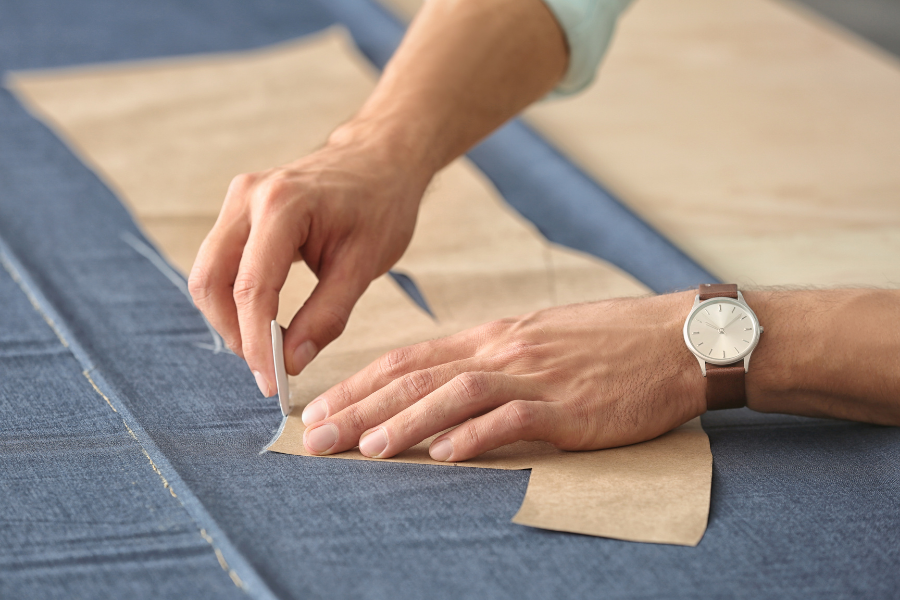
A walking foot or a roller foot helps performance fabric feed evenly without stretching under pressure. Slippery fabrics like nylon spandex shift when pinned, so switch to wonder clips or fine ballpoint pins placed within the seam allowance only. When cutting, use very sharp scissors or a rotary cutter with a fresh blade. Pattern weights hold pieces in place better than pins on a slick fabric surface. Cut a single layer whenever possible for the most accurate results, especially on compression spandex where even a small shift between layers changes the fit noticeably.
Fitting Activewear Patterns and Understanding Negative Ease
Activewear sizing works differently from woven garment sizing, and understanding negative ease is the key to a legging that stays up during a run and a sports bra that actually provides support. Negative ease means the finished garment measures smaller than your body, and the fabric stretches to fit and hold. Most activewear patterns from designers like Greenstyle Creations, Jalie, and Surge Sewing Patterns specify how much negative ease is built into each size. A legging might have 4–6 inches of negative ease at the hip, meaning you cut a smaller size and the fabric does the work of hugging the body.
Taking Accurate Measurements for Stretch Garments
Measure your full hip, thigh, and waist snugly but without pulling the tape tight. Compare those measurements against the finished garment measurements on the pattern envelope, not the cutting line measurements. If your hip falls between two sizes, go with the smaller size for compression leggings and the larger for looser athletic shorts. Waistbands are particularly unforgiving, so cut your waistband piece and test it around your waist before sewing it to the rest of the garment. A waistband that is too small will roll down during activity; one that is too large will not stay put.
Finishing Techniques That Last Through Laundering
Performance fabrics go through a lot: repeated washing, stretching, sweat, and chlorine if you are sewing swimwear. The finishing choices you make directly affect how long a garment holds up. Avoid serging waistbands and leg openings with a four-thread overlock alone, since the seam allowance bulk creates pressure points in compression garments. Instead, fold the seam allowance to the inside and topstitch with a twin needle or coverstitch for a flat, smooth finish. Use woolly nylon thread in the serger loopers for extra elasticity in seams that take heavy stress. For swimwear, skip the woolly nylon and use a chlorine-resistant thread or standard polyester thread, which resists pool chemicals better than nylon-based threads do.
Caring for Finished Activewear
Spandex-content fabrics break down faster when exposed to heat, so machine wash in cold water and skip the dryer entirely. Lay activewear flat to dry to help the fabric retain its recovery over time. Chlorine-resistant fabrics withstand pool use but still benefit from a rinse in fresh water immediately after swimming. Following these care steps extends the life of your handmade activewear considerably, which matters when you have invested time in fitting and construction.
Frequently Asked Questions
What needle should I use for sewing activewear fabrics?
Use a ballpoint needle for most knit performance fabrics and a stretch needle (HS) for high-spandex compression fabrics. Both types push knit fibers aside rather than piercing them, which prevents skipped stitches and runs. Schmetz makes reliable versions of both in sizes 75/11 and 90/14. Change your needle every 8–10 hours of sewing time, since a dull needle damages stretch fabric quickly.
Can I sew activewear without a serger?
Yes. A narrow zigzag stitch (1.5–2.0 mm width, 2.0–2.5 mm length) on a standard machine handles activewear seams adequately. A twin needle gives a clean, stretch-friendly hem. The tradeoff is that serged seams are faster, stronger under repeated stress, and lay flatter inside the garment, which matters in compression-fit pieces worn close to the skin.
How do I keep slippery performance fabric from shifting when I cut it?
Use pattern weights instead of pins and a sharp rotary cutter with a fresh blade. Cut single layers on a non-slip mat when accuracy is important. If you must cut double layers, place a sheet of tissue paper between the layers and beneath the bottom layer to reduce shifting. Remove the tissue paper after cutting before you sew.
Which activewear pattern designers are good for beginners?
Jalie and Greenstyle Creations both offer activewear patterns graded across a wide size range with clear instructions for working with stretch fabrics. Surge Sewing Patterns focuses specifically on athletic wear and includes detailed notes on fabric selection and ease. Starting with a simple legging or athletic shorts pattern before tackling a structured sports bra is a practical approach for sewists new to performance fabrics.
What fabric works best for leggings that hold their shape?
Look for a compression spandex or supplex fabric with at least 20% spandex content and strong four-way stretch recovery. The fabric should snap back immediately when you stretch it and release. ITY (interlock twist yarn) knits are softer and work for casual leggings, but they lack the compression and recovery of true supplex or power mesh, so they bag at the knees more quickly.
How do I hem activewear without a coverstitch machine?
A twin needle on your regular machine is the most practical alternative. Set the stitch length to 3.0 mm and use a stretch or ballpoint twin needle in size 2.0 or 2.5 mm width. The twin needle creates two parallel rows of topstitching on the right side and a zigzag on the wrong side, which gives the hem stretch. Sew slowly and hold light tension on the fabric to prevent tunneling between the two needle rows.
Is it worth buying chlorine-resistant fabric for swimwear?
If the garment will be used in a chlorinated pool regularly, yes. Standard nylon spandex breaks down within 10–15 wears in chlorinated water, losing color and elasticity quickly. Fabrics made with Xtra Life LYCRA, a product from The LYCRA Company, are rated to resist chlorine degradation for significantly longer. The cost per yard is higher, but the garment lasts far longer, which matters when you have invested time fitting and constructing it.
Start Your Next Activewear Project With the Right Foundation
Performance fabrics reward preparation. A fresh stretch needle, the right stitch settings, and a pattern sized for negative ease add up to activewear that fits and functions the way store-bought gear never quite does for bodies outside the standard fit block. If you want hands-on guidance choosing fabric and dialing in your machine settings, our sewing classes Asheville cover knits and activewear construction in a friendly, well-equipped studio. Browse our curated selection of compression spandex, moisture-wicking knits, and swimwear fabrics at sewingstudio.com, or come see us in Asheville and we will help you find exactly what your project needs.