

Activewear Sewing: Working with Performance Fabrics
Key Takeaways
Performance fabrics reward sewists who prep carefully, choose the right needle and thread, and respect the fabric's stretch and recovery. Get those three things right and activewear sewing clicks into place fast. Skip any one of them and you will fight the fabric every step of the way.
- Use a ballpoint or stretch needle (size 75/11 or 90/14) to avoid skipped stitches on knit performance fabrics.
- Woolly nylon or polyester thread gives seams the stretch they need to survive movement and washing.
- Most performance fabrics are heat-sensitive — keep your iron temperature low and always test on a scrap first.
- Flat-lock and coverstitch finishes look professional and hold up far better than standard zigzag on activewear.
- Pattern choice matters: look for designs drafted specifically for high-stretch fabrics with 75 percent or more stretch recovery.
What Makes Performance Fabrics Different from Regular Knits
Pick up a piece of swim fabric or compression jersey and you immediately feel the difference. Performance fabrics are engineered to move with a body under stress, wick moisture away from skin, and snap back to shape after repeated stretching. Most are made from synthetic fibers like nylon, polyester, spandex (also called elastane or Lycra), or blends of those fibers. That engineering is what makes them so satisfying to wear in finished garments. It is also what makes them trickier to sew than the cotton jersey in your stash.
The spandex content is the key variable. Most activewear fabrics contain between 10 and 30 percent spandex. That percentage controls how much the fabric stretches and how quickly it returns to its original shape, which is called stretch recovery. A fabric with strong recovery holds its structure through a workout. One with weak recovery bags out at the knees by the second wear. When you are shopping, test recovery yourself: stretch a 4-inch section to its full width, hold for 10 seconds, and release. Good recovery snaps back immediately with no rippling.
The Right Tools Make or Break Activewear Sewing
Sewing machine settings and notions that work fine for woven cotton will undermine your activewear project. The good news is that you probably need only a few targeted swaps.
Needles and thread
A ballpoint needle (also called a jersey needle) pushes between knit fibers rather than piercing them, which prevents snags and skipped stitches. For most activewear fabrics, a size 75/11 ballpoint works well. Move up to 90/14 for heavier compression fabric or swimwear. Change your needle every two to three projects. A dull needle is the single most common reason new activewear sewists get skipped stitches, and it costs almost nothing to fix.
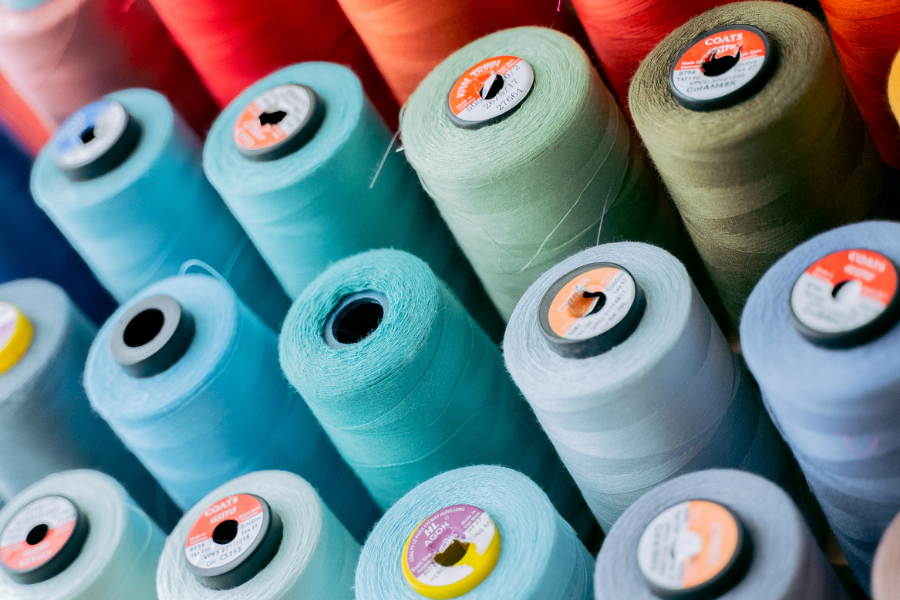
Thread matters just as much. Woolly nylon is the classic choice for serger loopers because it blooms to fill the stitch and gives seams excellent stretch. For your sewing machine's needle thread, a quality polyester all-purpose thread like Gutermann or Coats and Clark holds up better than cotton because polyester has a slight built-in stretch. Cotton thread has almost no give and will pop under the stress of an athletic seam.
Stitch selection
A straight stitch has zero stretch and will break the moment someone squats or lunges in your finished leggings. Use a narrow zigzag (width 1.5, length 1.5) or your machine's built-in stretch stitch for construction seams. A coverstitch machine produces the flat, professional-looking hem you see on commercial activewear and is worth the investment if you sew performance fabrics regularly. If you do not own a coverstitch, a twin needle on your home machine mimics the look on the right side and creates a small zigzag on the wrong side that allows stretch.
Cutting and Handling Performance Fabrics Without Frustration
Slippery, stretchy fabrics shift on the cutting table and distort easily before they ever reach your machine. A few habits make cutting much smoother.
Lay the fabric on a surface with some grip. A cutting mat or a flannel-backed tablecloth works well. Avoid cutting on a slick table. Weights hold the fabric more reliably than pins, which can distort stretch fabric along the cutting line. If you do pin, pin only within the seam allowance. Sharp scissors or a rotary cutter give cleaner edges than dull blades, which drag and stretch the fabric as you cut.
Check the grainline carefully. Most activewear patterns are designed so the greater stretch goes around the body, not up and down. If you cut off-grain, the finished garment will twist, sag, or pull in unpredictable directions. It takes only a minute to confirm the crosswise stretch is running around the body before you cut.
Prewash performance fabric before cutting. Most synthetic activewear fabrics shrink only minimally, but prewashing removes any finishing residue from the mill and lets the fabric relax to its resting state. Wash in cold water on a gentle cycle and air dry.
Choosing Patterns Drafted for Performance Fabrics
Not every knit pattern works with high-stretch performance fabrics. Patterns drafted for stable knits like ponte or sweatshirt fleece usually include less negative ease than activewear requires. Patterns made specifically for performance fabrics account for the fabric's recovery and are sized accordingly.
Indie designers have produced excellent activewear patterns in recent years. Closet Core's Sienna Maker Jacket and their Cirque Leggings are drafted with performance fabric in mind. True Bias makes knit-specific patterns that translate well to activewear fabrics. Outside the indie world, Jalie has an extensive catalog of athletic patterns tested against real stretch percentages. Each pattern should state a recommended stretch percentage, usually 75 to 100 percent, and you should test your fabric against that number before cutting.
If you are newer to activewear sewing, starting with leggings is a practical choice. They have few seams, the fitting is forgiving, and they give you a chance to practice coverstitch hems on a manageable project before moving to swimwear or sports bras, which have more complex construction and fit requirements.
If you want hands-on guidance with these techniques, the sewing classes Asheville at Sewing Studio Fabrics cover knit and performance fabric sewing in a small-group setting where you can ask questions in real time.
Frequently Asked Questions
Can I sew activewear on a regular home sewing machine?
Yes, you can. A home machine with a stretch stitch or narrow zigzag handles most activewear construction well. A serger speeds things up and gives cleaner edges, but it is not required. A coverstitch machine is the one upgrade that makes the biggest visible difference in finished hems, but a twin needle is a solid substitute.
What fabric is best for beginner activewear sewing?
A mid-weight nylon-spandex jersey is forgiving and widely available. It has good recovery, does not fray, and behaves predictably on the machine. Avoid very lightweight swim fabric or four-way stretch velvet until you have a few projects under your belt. Those fabrics require more experience to cut and sew accurately.
Why do my seams keep popping on finished activewear?
Popped seams almost always come from using a stitch with no stretch. A straight stitch breaks under the stress of movement. Switch to a zigzag, stretch stitch, or serged seam and use polyester or woolly nylon thread. Also check that your seam allowances are pressed or topstitched flat so they do not add bulk at points of stress.
How do I hem activewear without a coverstitch machine?
A twin needle on a standard home machine creates a coverstitch-like finish. Use a size 4.0/75 twin needle with woolly nylon in the bobbin and loosen the bobbin tension slightly. Sew slowly and do not stretch the fabric as it feeds. The result is two rows of parallel stitching on the right side and a zigzag on the wrong side that allows stretch.
Do I need to use special interfacing for activewear?
Standard woven interfacing is too stiff for performance fabrics and will restrict stretch. Use a knit interfacing or stretch tricot interfacing for any areas that need stability, like waistbands or zipper plackets. Cut it on the bias if your pattern calls for it, and always test that the interfaced section still has enough stretch for the garment's intended use.
How should I care for finished activewear garments?
Cold water and a gentle cycle protect both the fibers and the seam integrity. High heat degrades spandex over time, so air drying is strongly preferred over machine drying. Avoid fabric softener, which coats synthetic fibers and reduces their moisture-wicking performance. Most performance fabrics wash and dry overnight with no ironing needed.
Is swimwear fabric the same as activewear fabric?
They overlap but are not identical. Swimwear fabric is specifically designed to resist chlorine and UV degradation, which most general activewear fabric is not. If you are sewing swimsuits, choose a fabric labeled as swimwear or chlorine-resistant. For gym wear, yoga pants, or running gear that will not be submerged in treated water, standard nylon-spandex activewear fabric works well.
Start Your Next Activewear Project with the Right Fabric
Getting comfortable with performance fabrics opens up a whole category of garments you can make better at home than you can buy off the rack. Once you have the right needle in your machine, the right thread on your serger, and a pattern drafted for real stretch, activewear sewing moves quickly. The payoff is genuinely satisfying: leggings that fit exactly your body, sports bras in the fabric weights you actually want, and workout gear that holds up wash after wash. Browse our curated selection of performance knits, activewear patterns, and stretch sewing notions at sewingstudio.com, or come see the fabrics in person at our Asheville shop.