

wool suiting fabric
Key Takeaways
Wool suiting fabric is the gold standard for tailored garments because it holds its shape, presses cleanly, and drapes with a weight that synthetic blends simply cannot replicate. Whether you are cutting your first blazer or a full bespoke suit, understanding how wool behaves at the sewing table saves you time, frustration, and expensive fabric mistakes.
- Wool suiting comes in several weave structures, including twill, plain weave, and hopsack, each with different drape and durability profiles.
- Weight matters: lightweight wools around 200–250 gsm suit warm-weather tailoring, while 300–400 gsm fabrics work better for structured outerwear and winter suits.
- Pressing with a wool pressing cloth and steam is what separates a professional finish from a homemade look.
- Lining choice directly affects how the finished garment moves and wears, so treat it as part of the fabric decision, not an afterthought.
- Most wool suiting needs a stabilizing interfacing to support collar stands, lapels, and front facings without adding bulk.
What Makes Wool Suiting Fabric Worth the Investment
Walk into any tailoring workroom and you will find bolts of wool. There is a reason for that. Wool fiber has a natural crimp that gives it memory, meaning it springs back to shape after you sit, bend, or fold it. That same crimp creates tiny air pockets that regulate temperature, which is why a well-made wool suit is comfortable across a wider range of weather than its price tag might suggest. For home sewists shopping our suiting fabric collection, wool is the fabric category that most rewards careful pattern selection and good pressing habits. It forgives minor fitting adjustments better than stiff synthetics, and it responds to steam in ways that let you ease curves, shrink out fullness, and set sharp creases with a household iron.
Wool Suiting Weave Structures and When to Use Each
The weave is the first thing to understand before you buy, because it determines how the finished garment drapes, how forgiving the fabric is during cutting, and how long it holds up to daily wear. Wool suiting fabric is not a single product. It is a category that spans several distinct constructions, each suited to different projects and skill levels.
Twill weave wools
Twill weaves, including gabardine and serge, have a diagonal rib running across the face of the fabric. Gabardine in particular is tightly woven, smooth to the touch, and holds a crease exceptionally well. It is the classic choice for dress trousers and pencil skirts. The tradeoff is that gabardine shows every pin mark and seam allowance impression on the right side if you press carelessly. Always press from the wrong side or use a press cloth. Serge is slightly softer and works beautifully for blazers and jackets that need a bit more ease of movement.
Plain weave and flannel wools
Plain weave wool is balanced and stable, which makes it beginner-friendly for structured jackets. Wool flannel is a brushed plain or twill weave with a soft, napped surface. It presses beautifully, sews without slipping, and reads as approachable rather than formal, so it is an excellent choice for relaxed blazers or wide-leg trousers. Flannel does have a nap, which means you need to cut all pattern pieces in the same direction and expect to use 10–15 percent more yardage than the pattern envelope suggests.
Hopsack and open weaves
Hopsack has a looser, basket-style weave that gives it a slightly textured, casual face. It is popular for spring and summer suiting because the open structure breathes better than a dense gabardine. The tradeoff is that edges ravel more aggressively, so finishing seam allowances with a serger or Hong Kong finish immediately after cutting is not optional. A hopsack jacket paired with linen trousers is one of the most versatile warm-weather combinations a home sewist can make.
Choosing the Right Weight for Your Project
Fabric weight is measured in grams per square meter (gsm) or ounces per linear yard, and for wool suiting, getting this right is as important as choosing the fiber content. A fabric that is too heavy will make a summer blazer feel like a coat. A fabric that is too light will not support the structure a tailored jacket requires.
For warm-weather suiting or unlined jackets, look for wools in the 180–250 gsm range. These fabrics have enough body to hold a seam but drape softly enough to wear in temperatures above 65 degrees Fahrenheit. Italian wool crepe in this weight is a favorite for blazers worn into fall without a lining because the fabric itself is stable enough to hold its shape without interior support.
Structured blazers and full suits perform best in the 270–340 gsm range. This is the sweet spot for most Closet Core or Grainline Studio jacket patterns, where the pattern itself calls for a stiff weft interfacing and a full lining. Heavier weights above 350 gsm move into coating territory and work best for structured outerwear rather than suit jackets. If you are sewing the Closet Core Fern blazer or the Grainline Driftless cardigan in a heavier weight, consider extending ease at the shoulders and upper arms by 1/4 inch on each side to accommodate the fabric thickness.
Sewing and Pressing Techniques That Actually Matter
Wool suiting is one of those fabrics that rewards preparation. Before you cut a single piece, pre-shrink by steam pressing the entire length of fabric with a damp press cloth, or send it to a dry cleaner for a single professional press. Wool can shrink up to 3 percent when it first encounters moisture and heat, and you do not want that shrinkage to happen after you have cut and sewn the garment.
Needles, thread, and stitch length
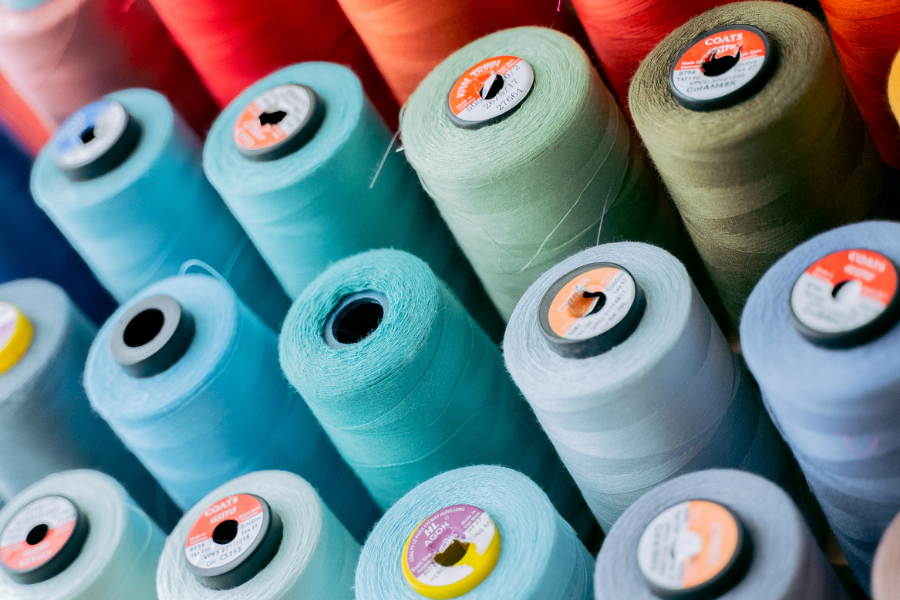
Use a size 80/12 or 90/14 sharp or microtex needle for most wool suiting. A universal needle works in a pinch but can leave slightly larger holes in a tightly woven gabardine. Polyester thread is the standard recommendation for durability and consistent tension. Silk thread is the traditional choice for hand basting because it does not leave an impression in the wool when you press over it, which matters when you are basting lapel roll lines or setting sleeves. Stitch length of 2.5 mm is a good starting point for most seams in suiting weight wool.
Pressing at every step
Press every seam before crossing it with another seam. This is not optional. Wool responds to steam and heat by relaxing and reshaping, which is what allows you to ease in sleeve caps, shape darts, and set sharp front creases. Use a tailor's ham for curved seams and a sleeve board for sleeves. Press on the wrong side whenever possible, and on the right side only with a wool pressing cloth between the iron and the fabric to prevent shine.
Frequently Asked Questions
What is the difference between wool suiting and wool coating?
Weight and structure. Wool suiting typically runs between 180 and 350 gsm and is woven to drape and move with the body. Wool coating runs heavier, often 400 gsm and above, and is designed for outerwear that needs to hold its shape without a lining providing structure. Using a coating weight for a blazer usually results in a garment that feels stiff and does not hang correctly.
Do I need to line a wool suiting jacket?
Not always, but it helps. Lining makes a jacket easier to put on and take off, hides the interior construction, and reduces wear on the wool itself. An unlined jacket requires cleaner interior finishing, like bound seams or Hong Kong finish. Bemberg rayon is the most popular lining for wool suits because it breathes well and does not add bulk.
How do I prevent wool suiting from pilling?
Pilling happens most often at friction points like under the arms and at cuffs. Choosing a tightly woven wool, finishing seam allowances to prevent fiber shedding, and dry cleaning rather than machine washing all reduce pilling. Lower-grade wools with shorter fiber staple lengths pill faster than Merino or other long-staple wool varieties.
Can beginners sew with wool suiting fabric?
Yes, with the right project choice. Wool flannel and medium-weight tweed are the most beginner-friendly suiting wools because they grip the cutting table, do not slip under the presser foot, and forgive minor imprecision in seam allowances. Gabardine is the toughest for beginners because it shows every error and marks permanently from pins placed in the seam allowance area.
What interfacing works best with wool suiting?
Weft insertion fusible interfacing is the most commonly used option for home sewists because it adds structure without excessive stiffness and does not distort the grain of the fabric the way woven sew-in interfacing can if applied carelessly. Brands like Pellon 906F and Vilene G700 are widely trusted. For lapels and chest pieces, sew-in hair canvas is the traditional choice and gives a more refined result in structured jackets.
How much extra yardage should I buy for napped or plaid wool?
Add 15–25 percent extra yardage for directional naps like flannel or velvet, and plan for one full repeat of additional fabric per major pattern piece when matching plaids or stripes. A pattern with six major pieces in a 4-inch plaid repeat might need an additional 24 inches of fabric beyond the envelope recommendation to match correctly at the side seams and center front.
Is wool suiting washable at home?
Some wool suiting labeled "machine washable" or "Superwash" can tolerate a cold, gentle machine cycle in a mesh laundry bag. Most traditional suiting wool, especially gabardine and flannel, should be dry cleaned or hand washed in cool water with a wool-specific detergent and laid flat to dry. Always test a swatch before washing the finished garment.
Find the Right Wool Suiting for Your Next Project at Sewing Studio
Wool suiting rewards the time you put into it. Good pressing habits, the right needle and thread combination, and a fabric weight matched to your pattern will take a blazer or trouser from looking handmade to looking tailored. Our team at Sewing Studio has spent years sourcing wool suiting fabrics that work for home sewists at every skill level, from approachable flannels perfect for a first Closet Core jacket to refined gabardines for the sewist ready to tackle a full two-piece suit. If you want to understand the full range of options across fiber content and construction, our guide to suiting fabric covers the broader category in depth. Shop our curated fabric selection at sewingstudio.com or visit us in Asheville.