

The Slow Fashion Movement: Why Handmade Matters
Key Takeaways
The slow fashion movement is a conscious rejection of disposable clothing culture. Sewing your own garments puts you in direct control of fabric quality, labor conditions, and how long a piece will actually last. Whether you are brand new to garment sewing or a seasoned maker, choosing handmade is one of the most concrete ways to opt out of the fast fashion cycle.
- Fast fashion produces roughly 100 billion garments per year, contributing to enormous textile waste and exploitative labor conditions (UN Environment Programme).
- Handmade garments made from natural fibers biodegrade far more readily than synthetic fast fashion pieces.
- Indie sewing patterns from designers like Grainline Studio and Closet Core give you fit control that off-the-rack clothing simply cannot offer.
- Choosing quality fabrics up front costs more per yard but dramatically extends the life of a finished garment.
- The slow fashion mindset applies to how you shop for fabric, not just how you sew.
What the Slow Fashion Movement Actually Means for Home Sewists
Slow fashion is not a trend or a hashtag. It is a framework for thinking about clothing as something worth making, maintaining, and keeping. The term was coined as a direct counterpoint to fast fashion, the production model built on volume, speed, and rock-bottom prices. Researcher Kate Fletcher of the London College of Fashion is widely credited with introducing the phrase in 2007. For home sewists, the slow fashion movement is not an abstract idea. Every time you choose a fabric, cut a pattern, and spend hours constructing a garment you plan to wear for years, you are living it. The question worth sitting with is whether your sourcing and sewing habits actually reflect that intention, or whether you are accidentally replicating fast fashion logic inside your own studio.
The Real Cost of Fast Fashion and Why Handmade Is Different
The numbers behind the fast fashion industry are genuinely hard to absorb. The UN Environment Programme estimates the fashion industry is responsible for 8 to 10 percent of global carbon emissions and uses more energy than the aviation and shipping industries combined. An estimated 85 percent of textiles end up in landfills or incinerators each year. These are not just environmental footnotes. They reflect a production model that treats garments as disposable and treats garment workers as expendable.
Handmade clothing does not automatically solve every problem in that system. You can still buy cheap, synthetic fabric and churn out garments you never wear. But sewing your own clothes creates natural friction at every stage of the process. You spend time choosing the fabric. You spend hours cutting and constructing. You fit the garment to your actual body. That investment changes your relationship to the finished piece. A linen shirt you spent twelve hours making is not something you toss in the donation pile after one season. That durability of attachment is one of the most underrated arguments for handmade clothing.
Fabric Choice Is Where Slow Fashion Starts
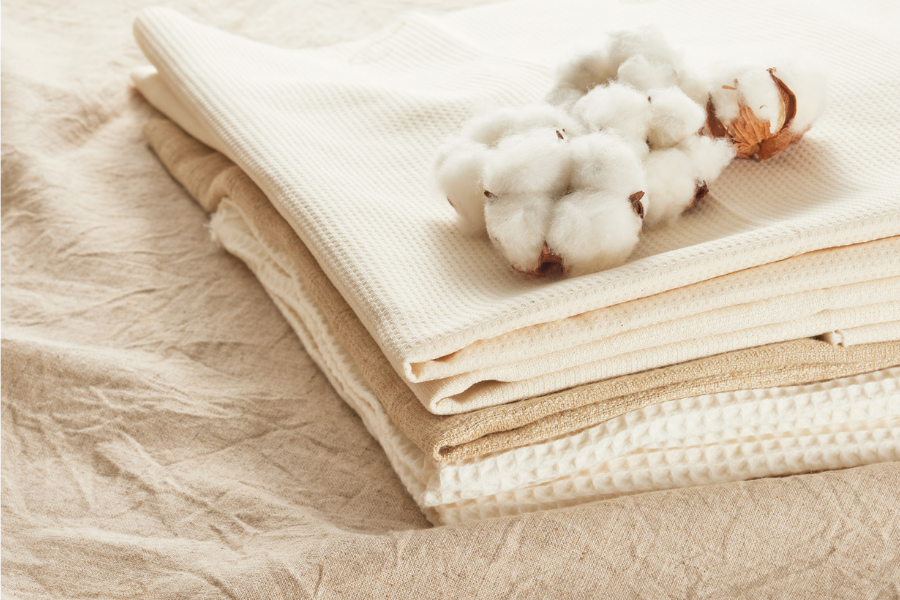
If you want your sewing practice to align with slow fashion values, fabric selection is the most important decision you make before you cut a single piece. Natural fibers like cotton, linen, wool, and silk biodegrade at the end of a garment's life. Synthetic fabrics like polyester shed microplastics during washing, and a study published in Environmental Science and Technology found that a single synthetic garment can release more than 1,900 microfibers per wash cycle.
What to Look for When Choosing Fabric
The criteria that matter most for slow fashion sewists are fiber content, origin, and weight. Fiber content tells you how the garment will age and how it will break down. Origin tells you something about labor and environmental standards in production. Weight is a proxy for durability: a 5 oz linen will wear out faster than a 7 oz linen, all else equal. Certifications like GOTS (Global Organic Textile Standard) and OEKO-TEX Standard 100 give you independent verification of organic and low-toxin claims, though neither guarantees perfect supply chain transparency. The honest tradeoff is that certified natural-fiber fabrics cost significantly more per yard. A quilting-weight cotton might run $8 a yard, while a GOTS-certified shirting cotton can run $18 to $28. The cost is real. The question is whether you are buying three yards of something you will wear for ten years or three yards of something that pills after six months.
Indie Patterns and the Community Behind Slow Fashion Sewing
One of the quieter revolutions inside the slow fashion movement is the growth of indie sewing pattern companies. Designers like Grainline Studio, True Bias, Closet Core, and Cashmerette write patterns with real fit guidance, graded across a genuine range of sizes, and built for fabrics that last. These are not patterns optimized for fast production. They are designed for sewists who want to understand why a dart is placed where it is, or how to do a full bust adjustment without losing the design lines.
Shopping indie patterns also means your money goes to a small design team rather than a large pattern conglomerate. Many indie designers publish on Substack, teach workshops, and engage directly with the people sewing their patterns. That kind of connection between maker and designer does not exist when you pull a pattern off a rack at a chain fabric store. It is one of the reasons the indie sewing community on Instagram and Substack has grown so consistently: people are not just sewing clothes, they are participating in a creative culture that values craft over convenience. Asheville is a particularly active node in that community, which is part of why sustainable sewing Asheville has become a real gathering point for makers who care about both craft and conscience.
Common Mistakes That Undermine Slow Fashion Intentions
Even sewists who care deeply about slow fashion can fall into habits that work against their own values. Fabric hoarding is the most common one. Buying fabric because it is on sale, without a specific project in mind, often means that yardage sits untouched for years and eventually gets donated or discarded. A better habit is to shop with a project plan: know what you are making, what fiber weight you need, and roughly how many yards before you browse.
Another common pitfall is abandoning a half-finished garment because fitting got frustrating. That fabric and labor time is already spent. Learning basic fitting adjustments like a swayback correction or a forward shoulder adjustment pays off across dozens of future projects. Cashmerette and Closet Core both publish clear fitting resources specifically for curvy and plus-size bodies, which is a gap that big pattern companies have historically left unaddressed. Finishing what you start, and wearing what you finish, is genuinely part of slow fashion practice. It is less photogenic than a new fabric haul, but it is more honest.
Frequently Asked Questions
Is handmade clothing actually more sustainable than buying from ethical brands?
It depends on your choices. Handmade clothing from natural fibers you wear for years is genuinely better than most mass-produced alternatives. But sewing with cheap synthetic fabric and abandoning projects halfway undermines that equation. The sustainability benefit of handmade comes from intentionality, not from the act of sewing itself.
What fabrics are the best starting point for slow fashion sewing?
Linen and medium-weight cotton are great starting points. Both are widely available, relatively forgiving to sew, and age beautifully. Linen especially gets softer with every wash. Wool is excellent for outerwear and trousers but requires more careful handling. Avoid blends with more than 20 percent synthetic fiber if longevity and biodegradability matter to you.
Does sewing your own clothes actually save money?
Rarely at first, and not always even later. Quality fabric and indie patterns cost real money. Where handmade wins financially is in the long run: a well-made linen dress you wear for eight years costs less per wear than three cheap dresses you replace every two years. Think cost-per-wear, not cost-per-yard.
How do I find out where my fabric was made?
Ask your fabric shop directly. Reputable retailers can often tell you the country of origin and mill name for their fabrics, especially natural-fiber goods. Look for GOTS or OEKO-TEX certification labels. These certifications are not perfect, but they provide third-party verification that reduces guesswork about fiber content and dye safety.
What is the difference between slow fashion and capsule wardrobe sewing?
A capsule wardrobe is a quantity strategy: fewer, more versatile pieces. Slow fashion is a values framework: intentional sourcing, quality materials, and longevity. They often overlap, but you can build a capsule wardrobe from fast fashion pieces and still miss the point. Slow fashion asks why and how, not just how many.
Are indie sewing patterns worth the higher price compared to big brand patterns?
For most garment sewists, yes. Indie patterns typically include more detailed instructions, better size grading, and fit guidance written for real bodies. Designers like True Bias and Grainline Studio also release fitting tutorials and updates. You are buying a better-supported sewing experience, not just a sheet of tissue paper.
Can beginners participate in slow fashion sewing, or is it only for advanced sewists?
Beginners are an ideal entry point. Starting with slow fashion habits from the beginning means you never build the impulse-buy-fabric, abandon-projects cycle that many intermediate sewists are trying to unlearn. Simple projects in quality linen or cotton, sewn to completion, are exactly what slow fashion looks like in practice.
Start Sewing with Intention This Season
The slow fashion movement gives you a reason to care more about what you sew, not less. It asks you to choose fabric that will last, patterns worth your time, and projects you will actually finish and wear. That is not a restrictive standard. It is a freeing one. When you stop buying fabric for the sake of buying fabric, you start sewing the things that actually matter to you. Sewing Studio Fabrics carries natural-fiber fabrics, indie patterns from more than 30 designers, and notions selected with exactly this kind of intentional making in mind. Browse our curated fabric selection at sewingstudio.com or come visit us in Asheville.