


sewing measuring tools
Key Takeaways
Accurate measuring tools are the foundation of well-fitted garments. Whether you sew with commercial patterns or draft your own blocks, the right rulers, gauges, and curves save time, reduce fabric waste, and help you achieve consistent results every single time you sit down at your machine.
- A flexible tape measure, a clear quilting ruler, and a seam gauge cover most everyday measuring tasks for garment sewists.
- Curved rulers like the French curve and hip curve are worth the investment if you do any pattern drafting or adjustment work.
- Material matters: metal rulers stay true over time, while plastic rulers work well for light use but can warp near heat sources.
- Marking and measuring tools work together — your measurements mean nothing if you cannot transfer them accurately to fabric.
- Beginners can start with five core tools and add specialty gauges as specific projects call for them.
The Measuring Tools Every Sewist Actually Uses
Walk into any well-stocked sewing room and you will find a familiar cluster of tools near the cutting table: a tape measure coiled on a pin cushion, a ruler tucked under a pattern piece, and probably a seam gauge stuck into a seam somewhere. These are not glamorous purchases, but they are the tools you reach for almost every single time you sew. Getting them right means less second-guessing, fewer fitting disasters, and more confidence when you cut into that piece of fabric you have been saving for the right project. This article walks through the most useful sewing measuring tools, what each one does best, and where beginners should start versus where advanced sewists might want to fill in gaps.
The Five Core Measuring Tools for Garment Sewing
Start here before you buy anything specialty. These five tools handle the vast majority of measuring tasks in garment construction, from taking body measurements to checking seam allowances to squaring up pattern pieces on the cutting table.
Tape Measure
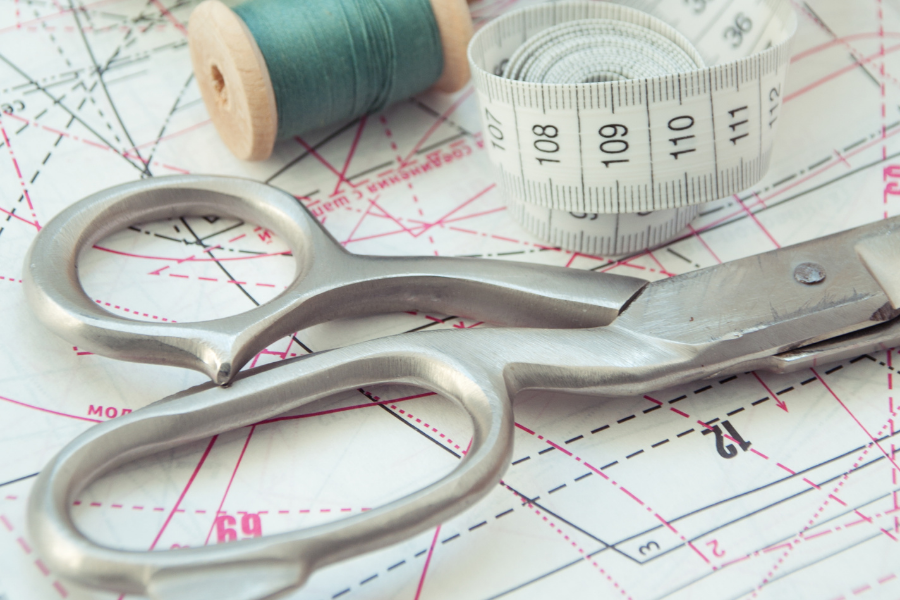
A 60-inch flexible tape measure is non-negotiable. You use it to measure your body, check fabric yardage, and verify ease on curved pattern pieces. Look for one that starts measuring at the very end (not half an inch in), reads clearly on both sides, and is made from fiberglass rather than fabric, since fabric tape measures stretch with use and lose accuracy. The Dritz 60-inch fiberglass tape measure is a reliable standard. Tradeoff: even fiberglass tape measures can curl at the ends after years of use, so replace yours every few years if you sew regularly.
Clear Acrylic Quilting Ruler
A 6-by-24-inch quilting ruler doubles beautifully as a garment sewing tool. The printed grid lines let you check grain lines, measure seam allowances, and draw parallel lines without doing mental math. Omnigrid and Creative Grids both make excellent versions. The tradeoff is that acrylic rulers can crack if dropped on hard floors and should never sit near a warm iron, since they will warp and become useless for accurate work.
Seam Gauge
This small 6-inch metal ruler with a sliding marker is one of the most underrated tools in garment sewing. Use it to check seam allowances as you sew, mark button placement at consistent intervals, turn up hem allowances evenly, and position pockets. The slider locks at your chosen measurement so you do not have to keep re-measuring. A Susan Bates or Dritz seam gauge costs around $3 and lasts for decades if you do not lose it first.
L-Square Ruler
An L-square (sometimes called a set square) helps you draw true right angles on pattern paper, check that grain lines run perpendicular to the fold line, and square up pattern pieces after you have made adjustments. If you do any flat pattern work at all, this tool earns its place quickly. Metal versions stay accurate longer than plastic ones.
Hem Gauge or Hemming Guide
Separate from the seam gauge, a hem gauge is a wider tool, often 12 inches, designed specifically to help you press consistent hem allowances. Some sewists use a cardboard template instead, but a metal hem gauge with marked increments speeds up the task significantly when you are hemming a full circle skirt or a pair of wide-leg trousers.
Curved Rulers and When They Are Worth Buying
If you stick to sewing commercial patterns without adjustment, you may never need a curved ruler. But once you start fitting your own muslin, grading between sizes, or drafting any kind of pattern from scratch, curved rulers become genuinely useful rather than just nice to have. The three most common curved rulers in garment sewing each do a different job.
French Curve
A French curve is a plastic or metal template with multiple different curve profiles along its edge. Sewists use it to redraw necklines, armscyes, and crotch seams smoothly after making length or width adjustments. Without it, those adjustments tend to produce awkward flat spots where two lines meet. You can find French curves at most art supply stores as well as sewing shops. The tradeoff is that it takes practice to know which section of the curve to use for which part of the body.
Hip Curve (Vary Form Ruler)
The hip curve is a gently curved ruler, usually 24 inches long, that mimics the long sweeping curves of side seams, hip lines, and skirt hems. It is sometimes called a vary form ruler. Pattern drafting systems like the Aldrich method use it constantly. If you sew pants and do your own fitting adjustments, this ruler will pay for itself within a few pairs.
Curved Hem Ruler
Specifically designed for marking curved hems at a consistent depth, this tool sits flat on the fabric and lets you mark a hem line parallel to the floor on a flared or circle skirt. Without one, marking a curved hem evenly usually requires a second person and a lot of patience. The tradeoff is that it only does one job, so beginners can skip it until they tackle their first circle skirt.
How to Choose Quality Over Gimmick
The measuring tool market includes a lot of products that look useful in packaging but rarely get used in practice. A few criteria help you separate the genuinely helpful from the shelf-sitters. First, check whether the tool starts measuring at the actual edge rather than leaving a gap. Any gap throws off your measurements, especially in short distances like seam allowances. Second, consider the material. Metal tools stay accurate, resist heat, and last for decades. Acrylic and plastic are fine for light use but have real limitations around heat and impact. Third, ask whether the tool solves a specific problem you actually have. A dress form measuring tape is genuinely useful if you adjust your dress form regularly. If you never touch your dress form, it just takes up drawer space. According to the American Sewing Guild, beginners consistently cite inaccurate measuring as a top source of fitting problems, which suggests that investing in better tools early saves significant frustration later. Our sewing notions online collection includes vetted measuring tools that have earned a place on our own cutting tables.
Frequently Asked Questions
What is the most important measuring tool for a beginner sewist?
Start with a good fiberglass tape measure and a seam gauge. Those two tools cover body measurements, seam allowance checks, and hem work. Once you have those basics dialed in, add a clear quilting ruler for cutting accuracy. You do not need a full set of drafting tools until you start fitting or adjusting patterns on your own.
Can I use a regular ruler instead of a quilting ruler?
You can, but a standard opaque ruler makes it harder to see what is underneath it, which matters when you are aligning a ruler with a grain line or a fold. Clear acrylic quilting rulers with printed grids give you more visual information and make precise cuts easier. The difference is small on a single project but adds up over time.
How often should I replace a tape measure?
Replace a fabric tape measure every year or two if you use it regularly, since fabric stretches. Fiberglass tape measures last longer, but check the end for curling or splitting, which can shift your measurements by a quarter inch or more. That kind of error is small on a single measurement but compounds when you take multiple measurements in sequence.
What is a seam gauge used for besides seam allowances?
Seam gauges are useful for marking consistent button spacing, turning up cuffs and hems to an even depth, positioning pockets at the same height on both sides of a garment, and checking topstitching distance from an edge. Once you start using one regularly, you will find it on your sewing table more often than almost any other tool.
Do I need a French curve if I sew only commercial patterns?
Probably not right away. A French curve becomes useful when you make fitting adjustments that alter a neckline or armhole curve, or when you grade between sizes mid-pattern. If you sew commercial patterns as-is or make only straight-line adjustments like lengthening and shortening, you can skip it for now and buy one when you need it.
Are digital or app-based measuring tools reliable for sewing?
Phone-based measuring apps can estimate distances, but they are not accurate enough for garment sewing where a quarter inch in a seam allowance changes how a garment fits. Use physical tools for anything that ends up on your body. Digital tools can be useful for rough estimates like room dimensions for home dec projects, but not for garment construction.
What is the difference between a hip curve and a French curve?
A French curve has multiple tight and varied curves along its edge and works best for shorter curved sections like necklines, armholes, and crotch seams. A hip curve is a single long gentle arc that handles side seams, hemlines, and the sweeping curves of pants legs. Many sewists who draft their own patterns own both and use them for different sections of the same pattern piece.
Start Measuring Right and Sew With Confidence
Good measuring tools are not the most exciting purchase in a sewist's toolkit, but they are among the most consequential. A stretched tape measure, a warped ruler, or a seam gauge you cannot read clearly all introduce small errors that compound into garments that do not fit the way they should. Buying quality tools once and caring for them well is genuinely more economical than replacing cheap ones every season. Whether you are building your first sewing kit or filling gaps in a mature setup, we stock the measuring tools we actually use ourselves. Browse our full range of sewing notions online or stop in to see us at our Asheville shop, where we are always happy to talk tools.