


Guide to Organic Cotton: Benefits for Sewers and Environment
Key Takeaways
Organic cotton skips synthetic pesticides and GMO seeds, making it safer for farmers, better for soil health, and genuinely nicer to sew with. If you have been reaching for conventional cotton out of habit, this guide walks you through what actually changes when you go organic — from fabric hand to finished-garment care — so you can decide if it fits your making practice.
- Organic cotton is certified to specific standards (GOTS is the most recognized) that cover farming, processing, and dyeing — not just the raw fiber.
- The fabric tends to feel softer and break in faster than conventional cotton because it skips harsh chemical processing.
- Expect to pay 20–40% more per yard, but the tradeoff is a cleaner supply chain and a fabric that often wears longer.
- Organic cotton behaves much like conventional cotton at the cutting table and sewing machine, so no major technique adjustments are needed.
- Pre-washing is still essential — organic cotton shrinks just as readily as any other woven cotton.
What Organic Cotton Actually Means (and What It Does Not)
The word "organic" gets used loosely in fabric marketing, so it helps to know what the certification actually covers. True organic cotton starts with seed: no genetically modified organisms, no synthetic pesticides, and no synthetic fertilizers during growing. The USDA National Organic Program sets those rules for fiber grown in the United States, while the Global Organic Textile Standard (GOTS) goes further by also regulating spinning, dyeing, and finishing processes. A bolt of fabric labeled GOTS-certified means the entire production chain met documented environmental and social criteria, not just the field where the cotton grew. If a fabric only says "made with organic cotton" without a named certification, that phrase has no legal weight. When you are shopping for organic cotton yardage, look for the GOTS seal or ask your retailer which certification applies. At Sewing Studio Fabrics, we note certifications in product descriptions so you are not left guessing.
Why the Environmental Case Is Stronger Than You Might Think
Conventional cotton farming covers about 2.5% of global cropland but uses roughly 16% of the world's insecticides (Textile Exchange, Organic Cotton Market Report 2023). Those chemicals run off into waterways, reduce soil biodiversity, and accumulate in farm workers' bodies over years of exposure. Organic cotton farming rotates crops to rebuild soil nutrients, uses beneficial insects for pest control, and relies on rainfall more than irrigation. The result is measurably healthier soil and lower water consumption per acre compared to conventionally irrigated cotton fields.
The dyeing stage matters too. GOTS-certified fabrics prohibit heavy metals, formaldehyde, and several azo dyes linked to allergic reactions. This is especially worth knowing if you sew for children, people with sensitive skin, or anyone who wears a garment directly against skin all day. The finished fabric is not just cleaner in an environmental sense; it is also less likely to irritate the person wearing it.
Carbon Sequestration and Soil Health
Healthy organic soil stores carbon instead of releasing it. Rodale Institute research on organic farming systems found that organic fields can sequester enough carbon to offset a meaningful portion of annual agricultural emissions. This is not a silver bullet for climate change, but it is a real benefit that conventional cotton farming cannot claim when synthetic fertilizers and tillage are degrading soil structure. For sewists who care about our practice being part of a longer sustainability conversation, this matters. You can read more about sewing choices that connect fabric sourcing to community values on our sustainable sewing asheville page.
How Organic Cotton Behaves at the Sewing Machine
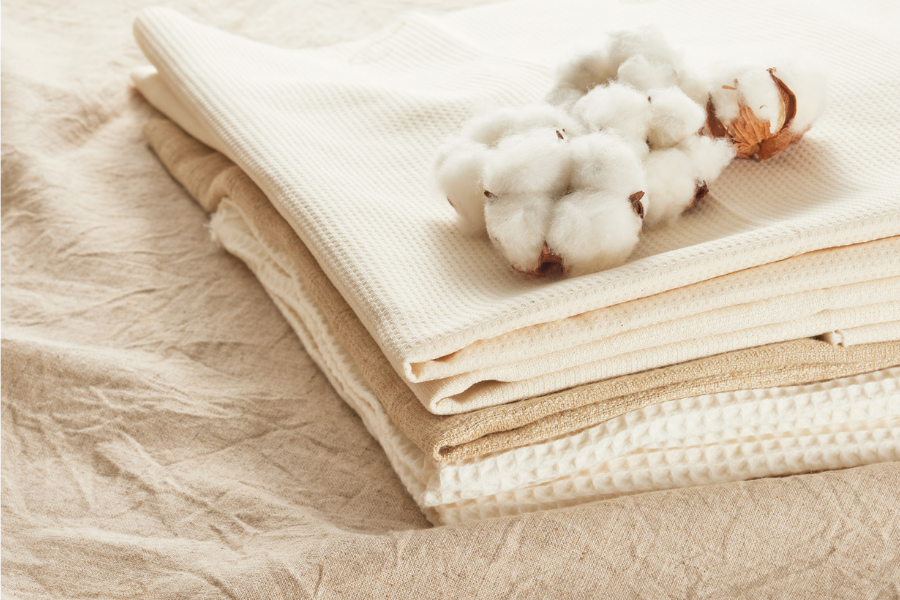
Good news: if you already sew with conventional quilting cotton, lawn, or broadcloth, organic cotton will not surprise you. The weave structures are identical, and your standard techniques apply. Universal needles in size 80/12 work for most weights. Presser foot pressure, stitch length, and seam allowance recommendations stay the same. Where organic cotton does differ is in hand — the feel of the fabric off the bolt. Because organic processing skips chlorine bleaching and heavy chemical finishes, the fiber retains more of its natural wax and softness. Many sewists notice that organic cotton feels slightly less stiff and breaks in to a comfortable drape faster than its conventional counterpart.
One practical note: organic cotton is often woven at slightly looser tensions to preserve fiber integrity, which means the cut edge can fray a little more readily. Serging or zigzagging seam allowances promptly after cutting is good practice, same as you would with a lightweight linen. Pre-washing before cutting is non-negotiable. Organic cotton shrinks 3–5% on the first wash, the same as conventional cotton, so wash and dry it the same way you plan to launder the finished garment before you cut a single piece.
Good Pattern Pairings for Organic Cotton Fabrics
Organic cotton comes in several fabric types, and each suits different patterns. Organic cotton lawn (lightweight, slightly crisp) is gorgeous in the Grainline Studio Willow dress or any floaty gathered skirt. Organic cotton jersey knit works well for the True Bias Marlo sweater or any fitted tee where breathability is a priority. Heavier organic canvas or twill is well suited to the Closet Core Sienna Maker Jacket or structured tote bags. If you are new to garment sewing and working through a Sewing Studio class project, organic cotton broadcloth is an excellent practice and finishing fabric because it presses crisply and shows topstitching clearly.
Understanding the Price Difference and What You Get for It
Organic cotton yardage typically costs 20–40% more than equivalent conventional cotton, and that gap is real. Yields per acre are lower without synthetic inputs. Certification audits cost money. Smaller production runs mean less economy of scale. When you pay more for organic cotton, you are covering those genuine costs rather than externalizing them onto farmworkers and ecosystems. That is a tradeoff worth naming clearly rather than glossing over.
What you get in return: a fabric that tends to soften and improve with washing rather than pilling or thinning quickly, a supply chain you can research and verify, and a garment you can wear confidently against sensitive skin. For everyday wearable sewing, especially children's clothing or anything worn against the skin for long hours, those qualities are worth real consideration. For a muslin or a practice version of a pattern you are still fitting, conventional cotton makes more sense economically. Use the right tool for the job, and save the nicer organic yardage for the version you intend to keep and wear for years.
Frequently Asked Questions
Is organic cotton the same as natural cotton?
Not exactly. All cotton is a natural fiber, but "organic" refers specifically to how it was grown and processed. Conventional cotton is also natural, but it is grown with synthetic pesticides, herbicides, and often defoliant chemicals at harvest. Organic cotton avoids all of those inputs and meets certification standards that conventional cotton does not.
Does organic cotton shrink more than regular cotton?
No, the shrinkage rate is about the same: roughly 3–5% on the first hot wash. Pre-washing before cutting is just as important with organic cotton as with any woven cotton. Wash and dry it the way you plan to care for the finished garment, and you will not lose significant size after that first cycle.
What certifications should I look for when buying organic cotton fabric?
GOTS (Global Organic Textile Standard) is the most thorough because it covers farming and processing. OEKO-TEX Standard 100 tests for harmful substances in the finished fabric but does not certify the farming method. USDA Organic covers the fiber growing stage in the US. Each has value; GOTS gives you the most complete chain of custody.
Can beginners sew with organic cotton?
Absolutely. Organic cotton wovens behave just like conventional cotton at the machine. Beginners in our Asheville sewing classes often use organic cotton broadcloth for their first garment projects. It presses well, frays predictably, and does not stretch or slip the way knits or silks can. It is a genuinely beginner-friendly fiber.
Is organic cotton better for people with skin sensitivities?
It often is. GOTS-certified fabrics prohibit several dye classes and finishing chemicals linked to skin irritation. If you or the person you are sewing for reacts to conventional dyed fabrics, switching to GOTS-certified organic cotton is a reasonable step to try. Consult a dermatologist for diagnosed textile allergies, as fabric is only one variable.
How do I care for finished garments made from organic cotton?
Care for organic cotton the same way you would any quality cotton garment. Cold or warm water, gentle or normal cycle, and line drying or tumble dry low will preserve the fiber and color. Hot washing and high-heat drying will accelerate wear over time, organic or not. Once pre-washed, the fabric is stable and reliable through regular laundering.
Where can I find organic cotton fabric by the yard?
Specialty fabric retailers that stock natural fibers are your best source because they can confirm certifications and let you feel the hand before buying. Big-box craft stores occasionally carry fabrics labeled organic, but certification details are rarely available. Online indie fabric shops and stores like Sewing Studio Fabrics, where staff can answer questions about the supply chain, are more reliable options.
Shop Organic Cotton Yardage and Start Your Next Project Right
Organic cotton is one of the most practical ways to align your sewing practice with your values without changing how you sew. The techniques are familiar, the results are beautiful, and the fabric holds up to real wear. Whether you are sewing a wardrobe staple for yourself, making children's clothing that sits against skin all day, or just curious what a cleaner supply chain feels like in your hands, organic cotton is worth trying. Browse our curated fabric selection at sewingstudio.com or come see the bolts in person at our Asheville shop where we are happy to pull yardage and talk through what suits your project best.