

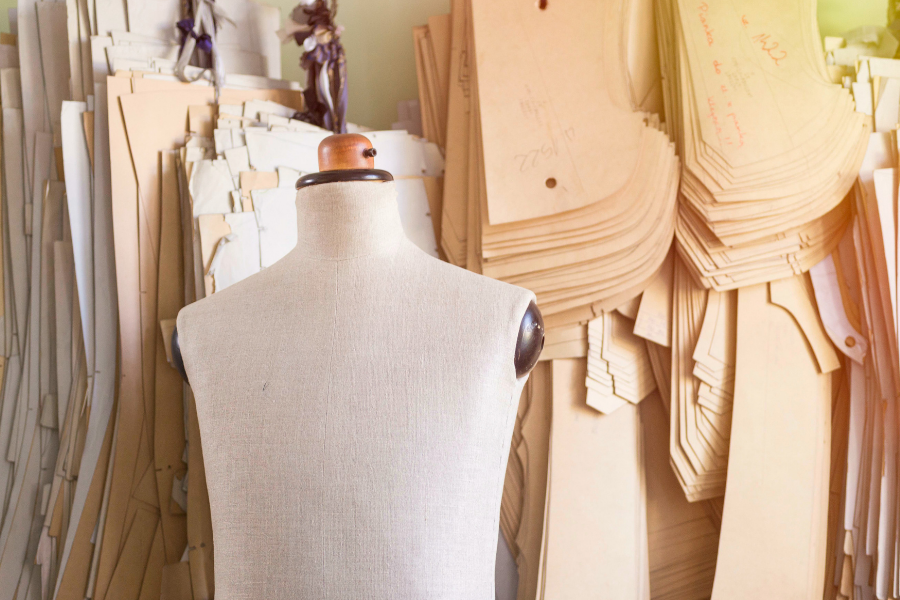
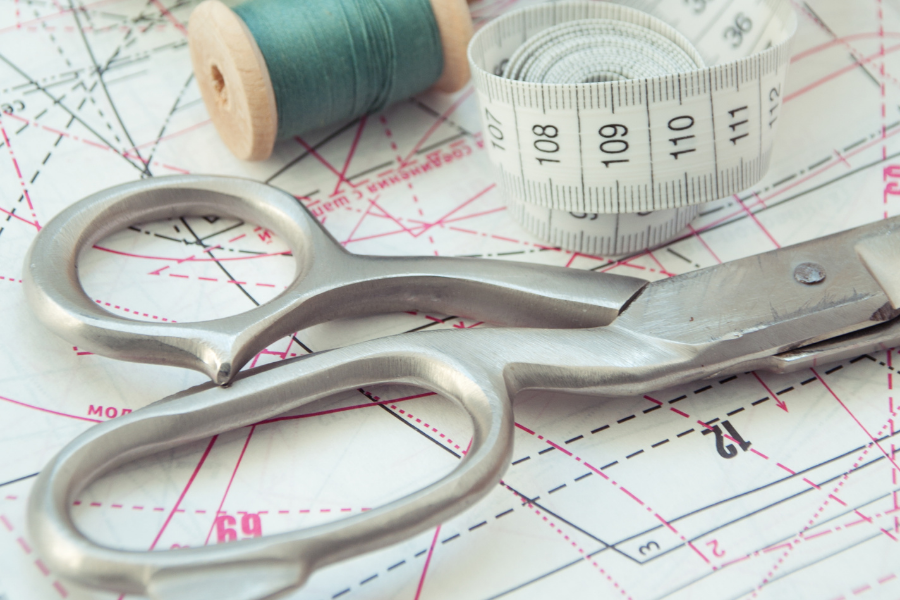


fabric cutting tools
Key Takeaways
Choosing the right fabric cutting tool comes down to knowing your fabric type, your preferred workflow, and how much precision your project demands. Rotary cutters work best for straight lines and quilting cotton. Fabric shears handle curves and heavier cloth. Neither replaces the other, and most sewists use both regularly.
- Rotary cutters paired with a self-healing mat are the fastest option for cutting straight edges and bias strips.
- Fabric shears (7- to 9-inch bent-handle dressmaker shears) give you control on curves, notches, and thick seam allowances.
- Seam rippers, snips, and thread scissors are small tools that do jobs shears and rotary cutters physically cannot.
- Blade sharpness matters more than brand; a dull rotary blade drags silk and frays linen before you even start sewing.
- Keeping your cutting tools fabric-only prevents dulling from paper, tape, and other household use.
The Right Cutting Tool Changes How Your Fabric Behaves
Most sewing mistakes happen before a single stitch goes in. A rotary blade that skips across silk charmeuse, shears that chew through the selvage of a woven linen, scissors borrowed from the kitchen drawer — these are not minor inconveniences. They change the shape of your cut pieces, which then affects your seam allowances, your fit, and eventually your finished garment. Understanding what each cutting tool actually does well (and where it falls short) is one of the fastest ways to improve your sewing results without changing anything about your machine or your technique.
Rotary Cutters: Speed and Precision on a Cutting Mat
A rotary cutter looks like a pizza wheel and works on the same principle — a round blade rolls across fabric instead of cutting with a scissor action. The most common sizes are 28mm, 45mm, and 60mm. The 45mm is the standard for most garment sewing because it handles gentle curves without too much wobble while still covering ground quickly on long straight cuts. The 28mm blade is better for small curved pieces like collar stands or bag straps. The 60mm is overkill for single-layer garment work but useful when cutting four or six layers of quilting cotton at once.
The tradeoff with rotary cutters is real: they require a self-healing cutting mat and either a quilting ruler or pattern weights to keep fabric from shifting. You cannot cut around a curved paper pattern piece freehand with a rotary cutter the way you can with shears. They also demand regular blade replacement. A 45mm Olfa or Martelli blade running through denim or canvas will dull within a few large projects. Rotary blades are inexpensive — usually $8 to $15 for a three-pack — and swapping a fresh one in takes thirty seconds. There is no reason to push through with a dull blade.
Self-Healing Mats: What the Size Actually Means
A 24-by-36-inch mat is the practical minimum for garment cutting. Anything smaller forces you to reposition fabric constantly, which introduces shifting and inaccuracy. The "self-healing" label means the mat's PVC surface closes over minor cuts rather than developing grooves that redirect your blade. Mats do eventually wear out, usually after several years of daily use. When you see deep linear grooves that catch your blade, it is time to replace the mat rather than replace the cutter.
Fabric Shears: Where Curves and Control Come First
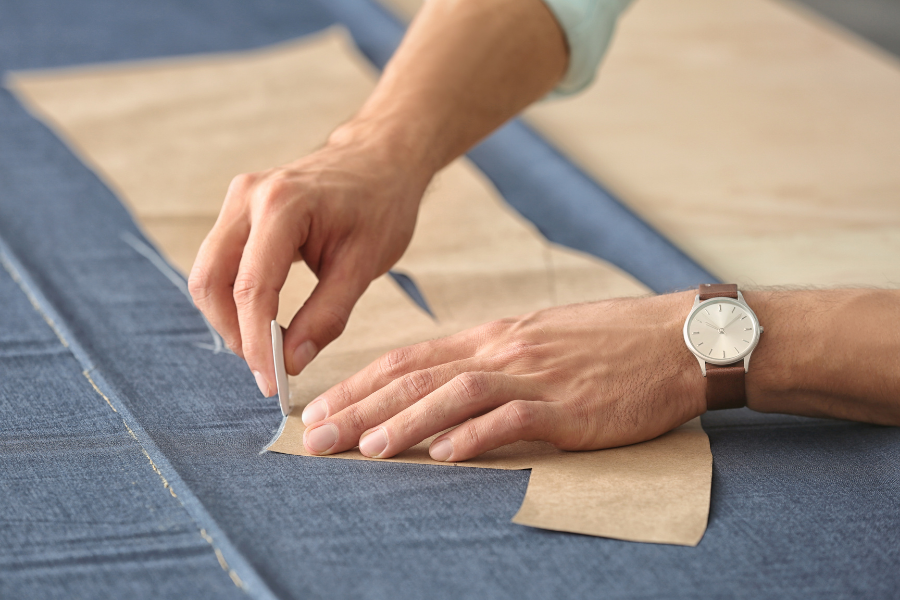
Fabric shears — specifically bent-handle dressmaker shears in the 7- to 9-inch range — are the cutting tool most garment sewists reach for when cutting around pattern pieces. The bent handle keeps the lower blade flat against the table while you cut, which prevents fabric from lifting and shifting mid-cut. That angle is what separates dressmaker shears from craft scissors or kitchen scissors, both of which hold the blade parallel to your hand and pull fabric upward as you cut.
Wiss, Gingher, and Kai are three brands with strong reputations among garment sewists. Gingher 8-inch dressmaker shears run around $40 to $50 and hold an edge well through natural-fiber fabrics. Kai shears, made in Japan, are lighter and easier on the hand over long cutting sessions, which matters if you are cutting multiple pattern pieces from a length of wool coating. The tradeoff with quality shears is cost and maintenance. Good shears need professional sharpening every year or two if you use them heavily. Most fabric shops and some tailors offer sharpening services for $5 to $15 per pair.
Pinking Shears and Their Specific Job
Pinking shears cut a zigzag edge that reduces fraying on woven fabrics. They are not a seam-finishing substitute for a serger or a French seam, but they are genuinely useful for fabrics that fray minimally (like wool) or for finishing seam allowances inside garments that will not be washed aggressively. They are also slower and harder to control than straight shears on curved seam allowances, so use them on the straight and gently curved sections only.
Small Cutting Tools That Do the Work Shears Cannot
Thread snips are spring-loaded scissors about four inches long. They are designed for one job: clipping threads at the machine without putting down your work. Most sewists keep a pair sitting next to their sewing machine at all times. They are not for cutting fabric — the blades are too short for control — but for the constant thread trimming that garment sewing involves. Kai, Clover, and Havel's all make reliable thread snips in the $8 to $18 range.
Seam rippers are not technically cutting tools, but they do cut: the small curved blade on most seam rippers slices through a stitch when you slide it under a thread. A sharp seam ripper glides. A dull one drags and risks cutting the fabric itself. Replace cheap plastic seam rippers when they start snagging rather than slicing. Some sewists prefer the Clover fine seam ripper, which has a thinner shaft that fits more easily under tightly sewn stitches in silk or fine cotton voile. Finally, small embroidery scissors (3 to 4 inches, pointed tips) are the right tool for clipping curves and notches in seam allowances, tasks that shears are too large for and snips lack the precision to handle cleanly.
Frequently Asked Questions
Can I use a rotary cutter without a self-healing mat?
No — and you should not try. A rotary cutter on a bare table or a thin craft mat will immediately dull the blade and can damage your work surface. The self-healing mat also gives you measurement grid lines to align fabric grain before cutting, which is a practical bonus beyond just protecting your table.
How often should I replace rotary cutter blades?
Most sewists replace blades every three to five large projects, or any time the blade skips rather than rolling smoothly. Fabrics like silk and fine cotton show blade wear fastest because they require clean, consistent pressure. Denim and canvas dull blades more quickly but are less sensitive to a slightly worn edge.
What makes fabric shears different from regular scissors?
The bent handle is the main structural difference. It keeps the lower blade on the cutting surface while you cut, preventing fabric lift. Quality fabric shears also use longer blades with sharper, precisely set angles than general-purpose scissors. Using regular scissors on fabric will work in a pinch but pulls fabric out of grain and tires your hand faster.
Are electric fabric cutters worth it for home sewists?
For high-volume cutting — like someone running a small bags or aprons business from home — an electric rotary cutter can save significant time. For garment sewists making a few pieces per month, the cost ($80 to $200) is hard to justify over a quality manual rotary cutter and good shears. Electric cutters also require practice to control accurately on curves.
How do I keep my fabric scissors sharp longer?
Use them only on fabric. Paper dulls blades fast; even cutting paper patterns regularly will shorten a shear's edge life noticeably. Store shears closed, with a blade cover if possible. Wipe blades with a dry cloth after cutting synthetic fabrics, which leave a light residue. Have them professionally sharpened rather than using a home pull-through sharpener, which removes too much metal.
What cutting tools do I need to start sewing garments?
Start with one pair of 8-inch dressmaker shears, a seam ripper, and a pair of thread snips. Add a 45mm rotary cutter and a 24-by-36-inch self-healing mat once you are cutting patterns regularly. Small embroidery scissors are a useful fourth addition once you are working on fitted garments with curved seams.
Does fabric type change which cutting tool I should use?
Yes, consistently. Slippery fabrics like silk charmeuse and rayon challis are easier to control with shears and pattern weights than with a rotary cutter on layers. Stable wovens like quilting cotton and linen cut cleanly with a rotary cutter on a mat. Knit fabrics cut best with a rotary cutter because shears can stretch the cut edge if you are not careful.
Stock Your Cutting Kit With Tools That Actually Work for Your Fabric
Good cutting tools are not expensive compared to the cost of the fabric you are cutting. A dull blade or the wrong scissors for the job costs you yardage, accuracy, and time. Build your kit around what you actually sew: a quality pair of dressmaker shears, a 45mm rotary cutter with spare blades, a generous self-healing mat, and a handful of small tools that handle thread and notch work. Check our full range of sewing notions online to find trusted brands at every price point, and come see us in Asheville if you want to hold a pair of shears before you buy.